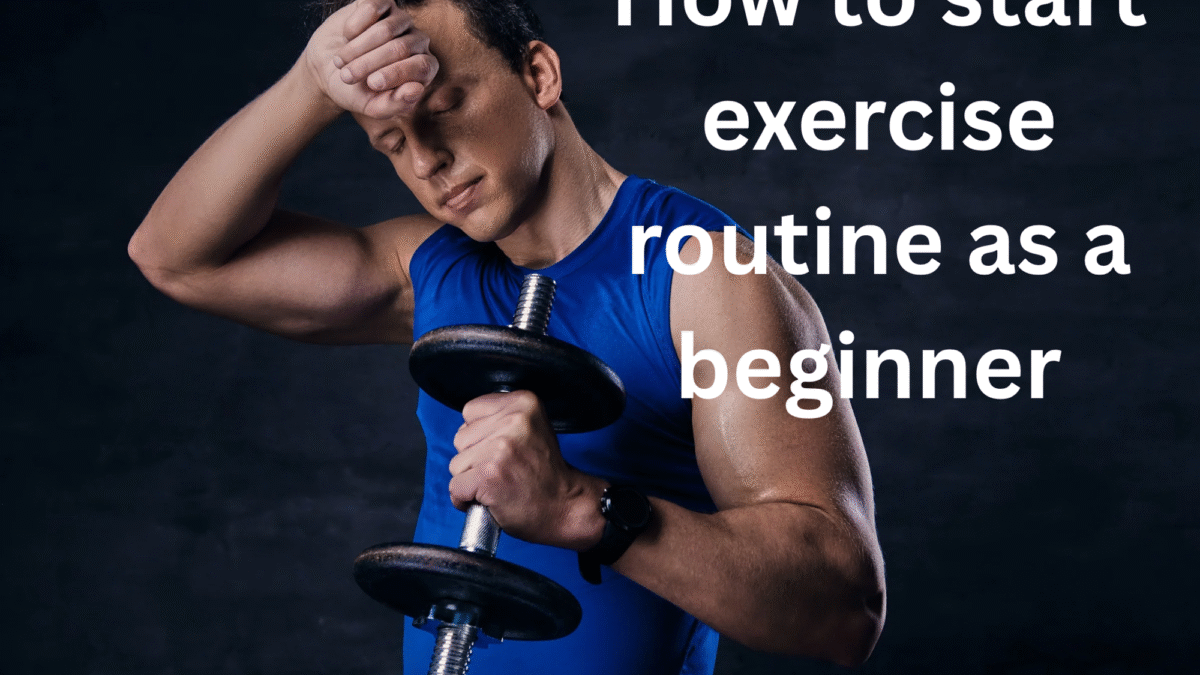
HOW TO START EXERCISE ROUTINE AS A BEGINNER

Before starting any kind of exercise routine one should know the basics of fitness. You should know the main components of fitness, basic fundamentals, warm up, cool down Stretching etc.
A well structured workout routine can help beginners build a solid foundation, improve their fitness & boost their confidence.
Major components of fitness-
Cardiovascular endurance- Ability of Cardiovascular and respiratory system to transport oxygenated blood to the working muscle for extended length of time without fatigue.
Muscular strength- Ability of muscle to perform against resistance in any given time.
Muscular endurance- Ability of muscle to exert force for extended length of time without fatigue.
Flexibility- The range of motion of joints. It helps to improve joint health and prevent injuries.
By focusing on a balanced routine which includes Cardio, strength Training, Stretching for Flexibility, you can achieve great results.
Strength Training (3 days per week)- Very important for building muscle, increasing metabolism & improving overall strength.
Cardio training (2-3 days per week)- Cardio is essential for heart health, burning calories and increasing stamina.
Flexibility (Everyday)- Flexibility helps to improve joint health, reduces muscle soreness & prevents injuries. Many times people overlook stretching exercises, but it’s very important. Always spend 5-10 minutes at the end of sessions for Stretching. It’s ok if you do 2-3 sets less but never skip stretching.
Start with a warm up- warm up is very important as it prepares your body, increases your heart rate and improves circulation & reduces the risk of injury. For example- arm circle, shoulder rotation, free squats, high knees, lunges etc.
Strength Training- As a beginner you should start an exercise routine with basic body weight exercises that target all the major muscle groups. Start your routine slowly. Begin with lower weights, reps, sets and gradually increase as you feel comfortable. Aim to do 2-3 sets for each exercise with 12-15 reps each. Rest for about 60-90 seconds between each set.
Here are some exercises you can start with-
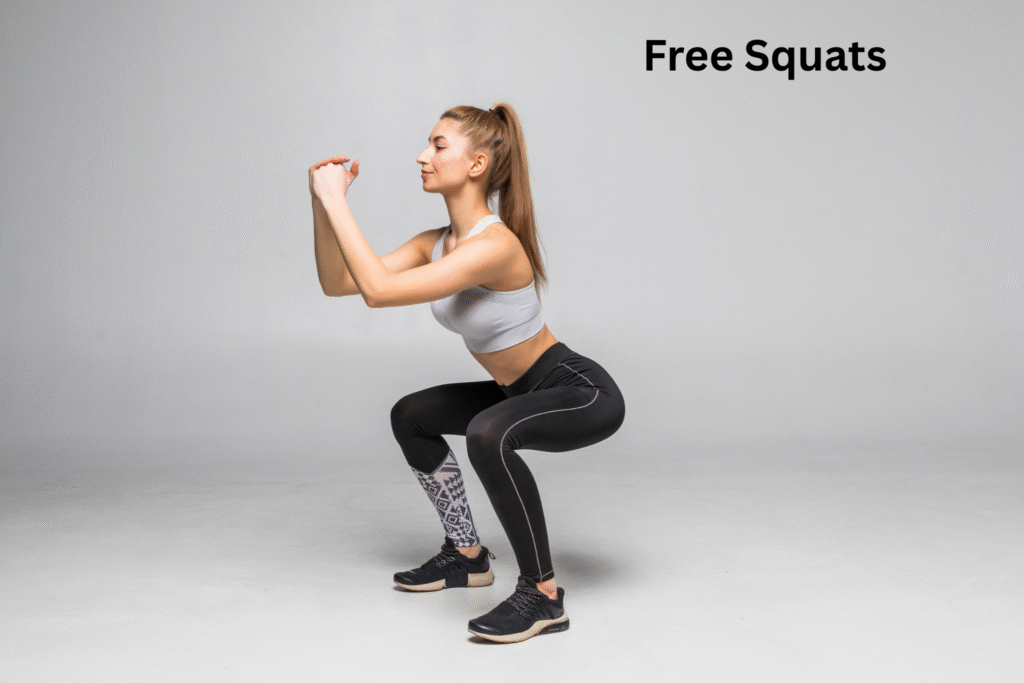
1) Free squats- It targets the legs, glutes and core. Stand with feet shoulder width apart, squat down, sit as you sit on a chair & then return to standing position. Squat down until your upper thigh gets parallel to the floor. Keep your back arch throughout the movement.
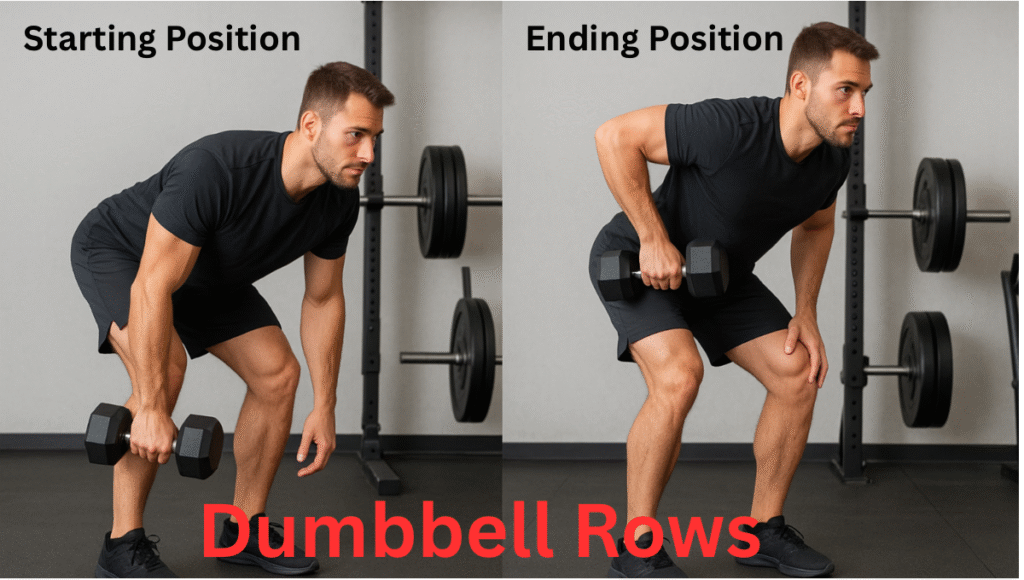
2) Dumbbell rows- works the back muscle. Holding Dumbells in your hand, bend slightly forward, upper body parallel to the floor, back arch, pull the Dumbells towards your abdomen, squeeze your shoulder blades together.
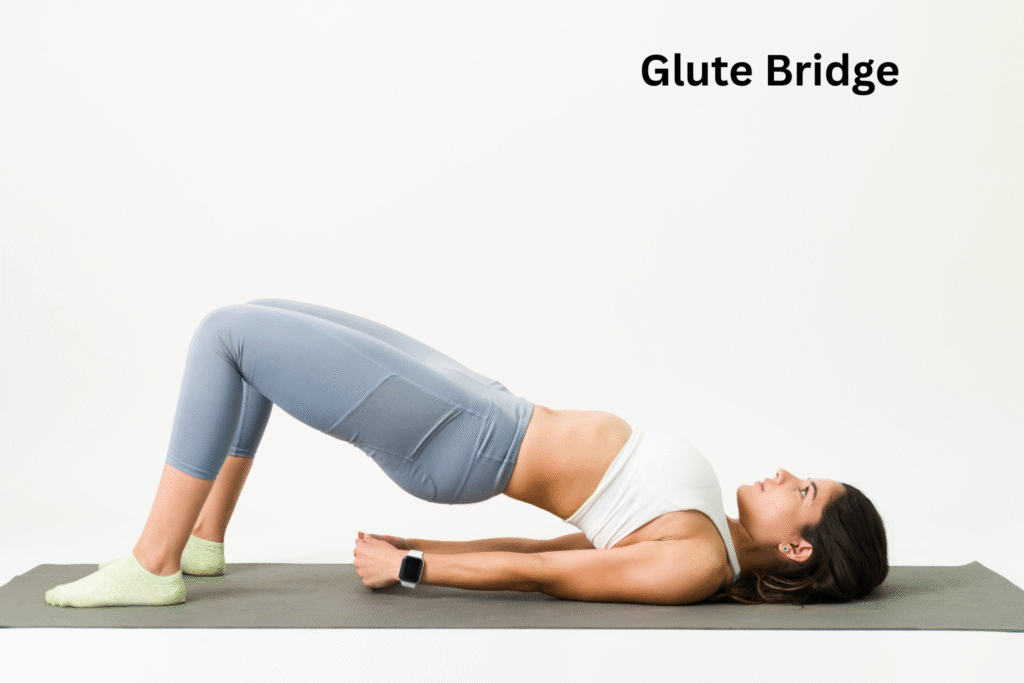
3) Glute bridge- Targets the glutes & Hamstring- Lie on your back, knee bent, lift your hips towards the ceiling, squeeze your glutes at the top & then lower down.
4) Dumbell shrugs- Targets the Trapezius. Holding the Dumbells in your hand, keeping your torso still, move your shoulder upwards (Elevation) & slowly lower the Dumbells back.
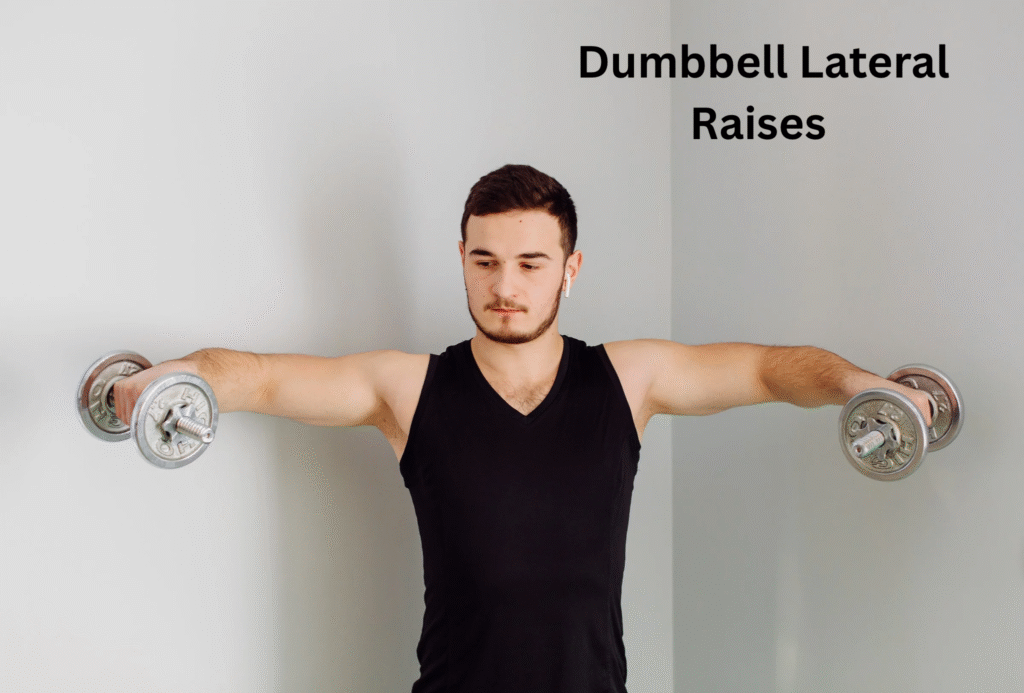
5) Dumbell Lateral raise- Targets the middle deltoid. Stand straight, holding the Dumbells in both hands, keep your core engaged. Lift the Dumbells to the side ways with your elbows pointing upwards. Lift it to the shoulder level & then lower it back very slowly.
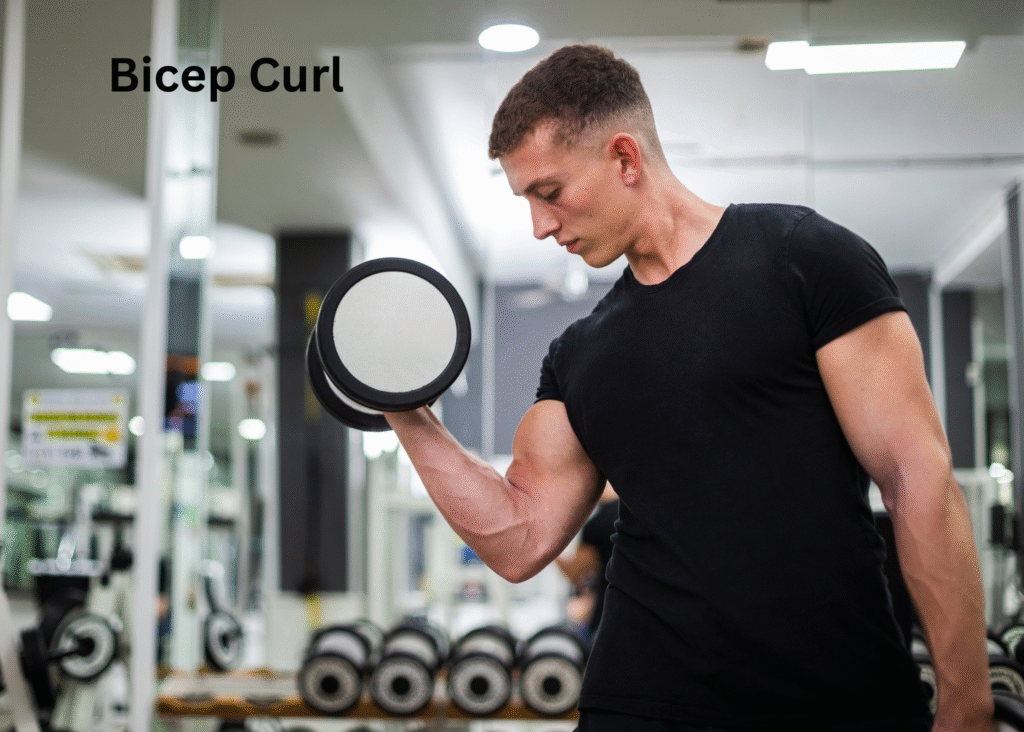
6) Bicep curl- Focuses on your arms. Start with slowly lifting the Dumbells towards your shoulder and slowly lower them back.
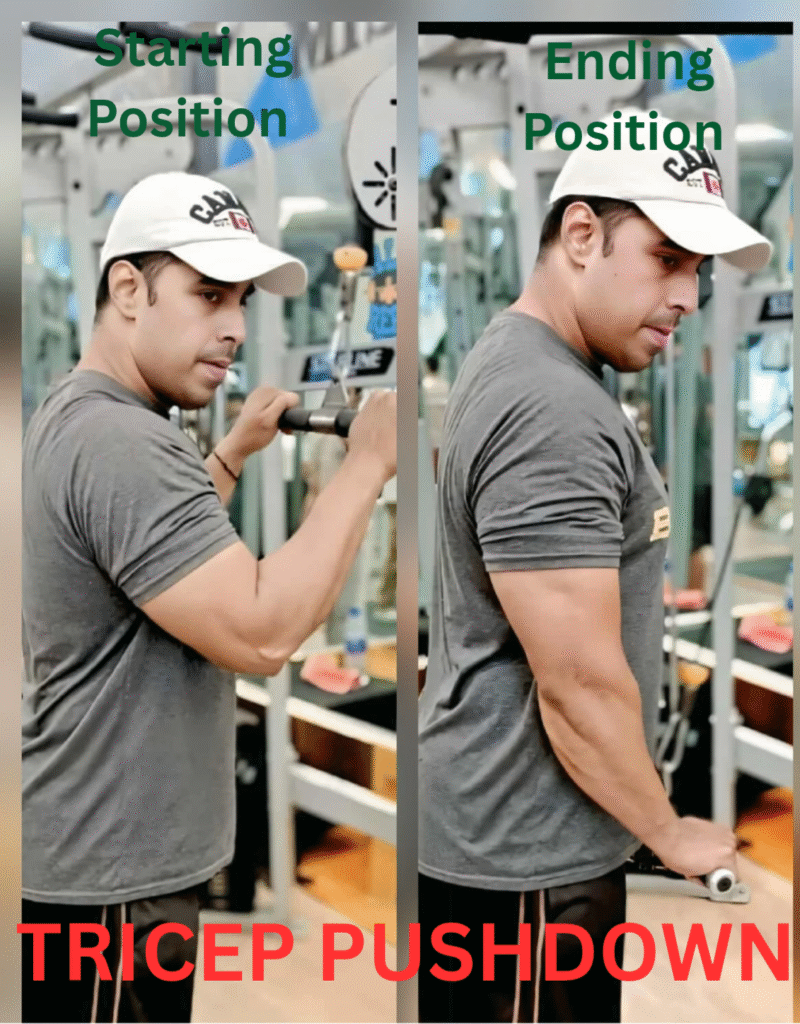
7) Tricep pushdown- Targets all three heads – the Lateral, medial and long head. Stand straight, hold the handle with your arms, palms facing down. Push the handle down, extending your elbows fully. Keep your chest up and shoulders back through out the movement. Then slowly return your arms to the starting position in controlled manner.
8) Back extension- Targets Lower back. Lie on the machine facing down, rest your thighs on the pads. Your ankle should be locked in foot catches. The pad should be just below your hips bones, allowing you to bend at the waist. Keep your arms crossed to your chest. Slowly bend forward at your waist, bent down as much as possible, keeping Lower back arched throughout the movement, then Slowly up to the starting position.
Each exercise works a different muscle group for balanced development and allows you to recover more quickly. Focus on getting the form correct first, start with light weights. Gradually you can add more weights or reps.
Cardio training- Cardio is important for heart health, burns calories and to improve stamina.
Here are some Cardio routine for beginners
1) Walking- Begin with 15-20 minutes at a brisk pace,gradually increasing to 30-45 minutes. Try adding interval training or fast walk or jogging for variations.
2) Cycling- Stationary cycle is a low impact Cardio. Do it for 15-20 minutes at a steady pace. Increase the resistance as you get stronger.
3) Swimming- Swimming is also a good Cardio option. It works your full body and also it is gentle on your joints. If you like swimming then you should do it for 20-30 minutes.
Flexibility- Stretching is very important as it improves your flexibility which helps improving joint health, reduces muscle soreness & prevents injury.
Rest & Recovery- Rest is very important. You should rest at least two days per week, allowing muscles to repair and grow stronger. Do light stretching or yoga on rest days if you feel sore,as it can improve blood circulation and help with recovery.
Here is a sample workout routine for beginners
Day 1- Full body strength training with Stretching (45-60 minutes).
Day 2- Cardio for half an hour with Stretching.
Day 3- Rest or Stretching.
Day 4- Full body strength training with Stretching (45-60 minutes).
Day 5- Cardio for 20-30 minutes with Stretching.
Day 6- Full body strength training with Stretching (45-60 minutes).
Day 7- Rest.
This schedule will allow your body to recover between strength training sessions.
- FINAL THOUGHTS
Concentrate on form- Instead of lifting weights focus on form first. Proper form prevents injury and ensures you are targeting the right muscle. Focus on technique before increasing intensity.
Stay regular- Results come from consistency. Set a workout routine that you can stick to for a longer period.
Listen to your body- It’s ok if you have muscle soreness. But apart from normal soreness, if you feel pain, then stop your workout immediately.
Hydrate your self- Your body needs fuel. Drink plenty of water.
Eat well- Eat well. Don’t workout on an empty stomach. Eat a balanced diet.
Take guidance if needed- If you are not sure about form or technique, then go for a personal trainer.
- STAY AWAY FROM STEROIDS.
- SAY NO TO DRUGS.