TIGHT MUSCLES, STIFF LIFE- STRETCH TO HEAL.

Whenever I go to the gym, I see people; they are all focused on building muscle. But they never do stretching after they finish their workout. They will do a couple of sets more for muscle development, but they will never do the stretching. Even some runners and weight lifters focus on their cardiovascular or strength training and pay very little attention to flexibility.
Why is this so? Because they don’t know how important it is to do the Stretching, end of the workout. It seems that no one educates them about stretching. Today we will see why stretching is so important to live a healthier life.
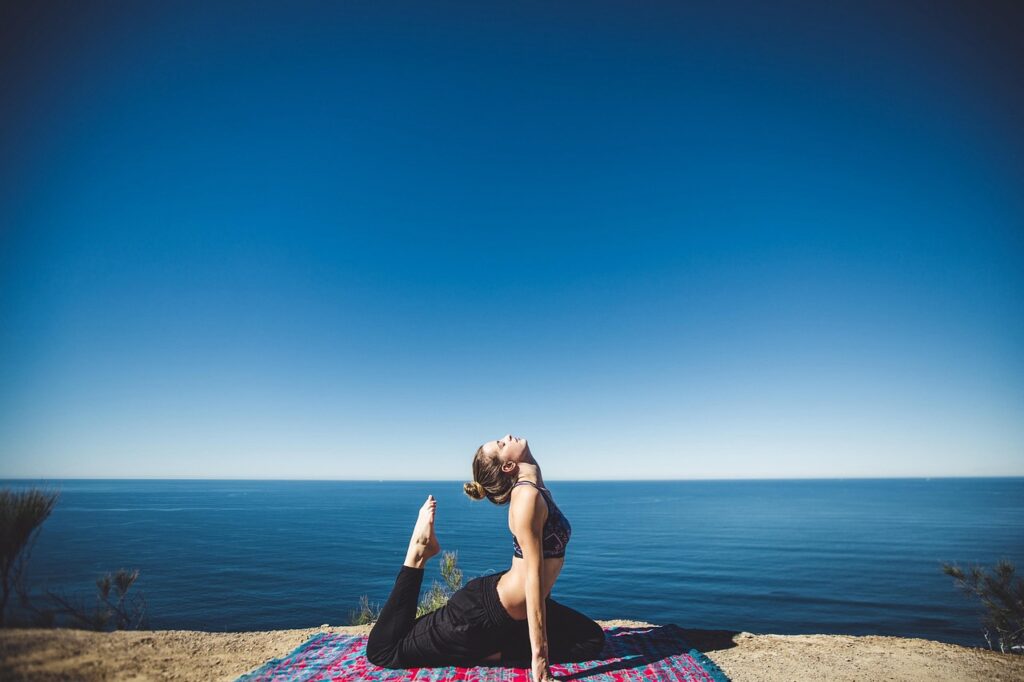
Flexibility is one of the main components of fitness. But compared to other fitness components like strength, endurance- flexibility is often overlooked. It refers to the ability of muscles and joints to move freely in their full range of motion. Flexibility allows your body to move more efficiently and freely. It helps you to perform daily tasks like bending, twisting or lifting comfortably. When your body moves in full range of motion freely, it absorbs all the pressure and tension protecting you during any physical activity. If your muscles are tight, they can pull your body out of alignment, which can cause poor posture. With regular stretching you can improve your posture, maintain proper balance between muscle groups and it will reduce muscle pain as well.
Stretching helps you to recover fast post workout and reduces muscle soreness as it improves blood flow to muscles, delivers more oxygen and nutrients while removing waste products.
It’s important to include flexibility training in all your fitness programs, especially since the research suggests that injuries do occur as a result of tight or stiff muscles.
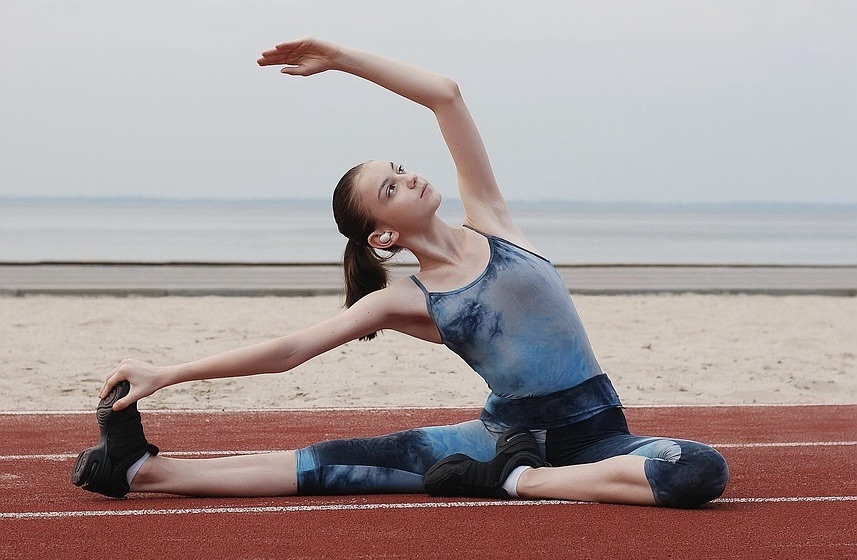
Flexibility is a range of motion within a joint along the various planes of motion. The flexibility of a joint depends on the extensibility, which is the ability to extend without causing tissue damage and elasticity- ability of the muscle to return to its original size and shape after being stretched or shortened of the structures surrounding it. Flexibility is not something in general, it’s specific to a particular joint or set of joints. That means it is not necessary to have your lower body flexible, if you have a flexible Upper body.
OVERFLEXIBILITY – Joint muscles may become more flexible. As you get too flexible in any joint, you get less support by its surrounding muscles. Less flexible or too much flexible, both can be bad, because both increase risk of injury. If your muscle has reached to its maximum length, and if you try to stretch it more, it will stretch the ligament and put undue stress on tendon & you don’t want both. If ligament stretched more than 3% to 6% of its normal length, it will tear. Tendon should not be stretched. Once you achieved the desired level of flexibility, you should stop Stretching of that muscle until some of its flexibility lost.

Types of flexibility- Many people are unaware that there are different types of flexibility. According to the various types of activities involved in athletic training, these different types of flexibility are grouped. The one which involved motion, called dynamic and the one which did not involve motion are called static.
Dynamic flexibility- Ability to perform dynamic movements of the muscles to bring a limb through its full range of motion in the joints, is called Dynamic flexibility.
Static active flexibility- The ability to assume and maintain extended positions using only the tension of the agonist and synergists while the antagonists are being stretched.
Static passive flexibility- Ability to assume extended positions and then maintain them using your weight, support of your limbs or some different things like chair etc.
Active flexibility is harder to develop than passive flexibility. Active flexibility requires passive flexibility in order to assume an initial extended position and it also requires muscle strength to hold and maintain that position.
Muscle has an elasticity. During workout,
It contracts, lengthens and shortens the performance. After workout it remains contracted for a while. Stretching after a workout can regain muscle’s length and restore their normal state.
There are different types of stretchings.
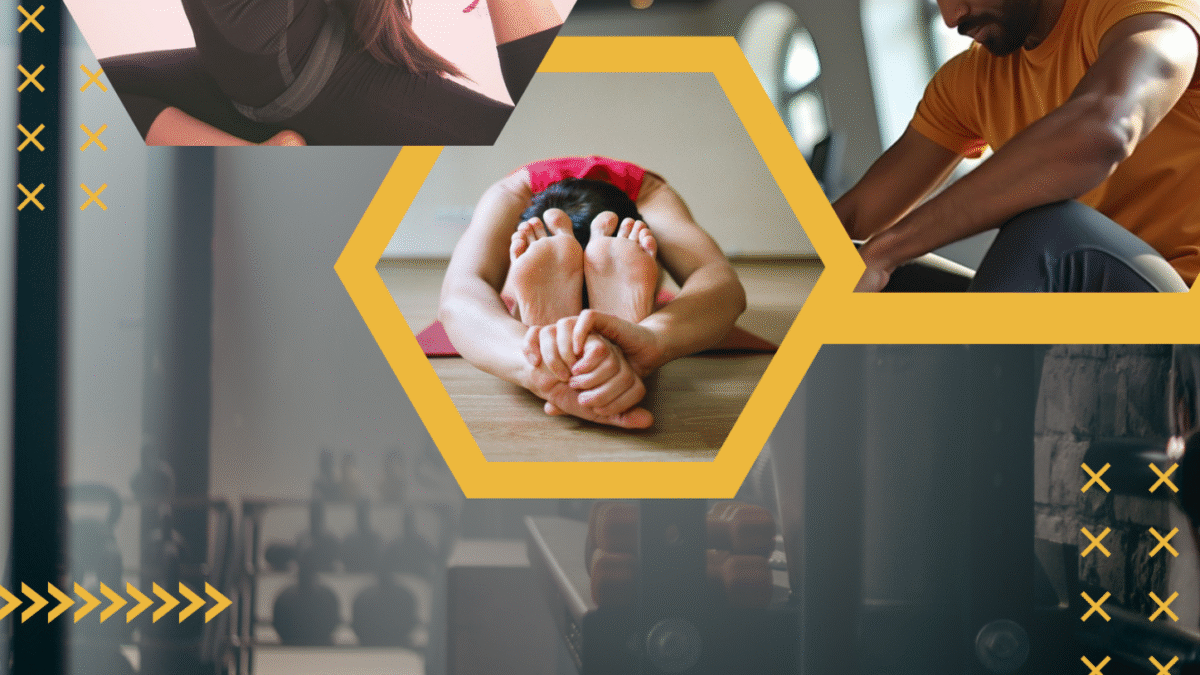
1) Static stretching- It involves a stretch position for 15 to 60 seconds to lengthen the muscles and improve flexibility. It should be done after a workout for best results.
2) Dynamic Stretching- It uses controlled and gentle movements that replicate exercise activities to warm up muscles before a workout.
3) Ballistic Stretching- This Stretching involves fast, jumping movements to push muscles beyond their normal range of motion. It should be used very carefully to avoid injuries. Mostly done by athletes.
4) PNF (Proprioceptive Neuromuscular facilitation)- It combines stretching and contracting of muscles to enhance flexibility and strength. It is done with the partner usually.
5) Active Stretching- In this type of stretching, the muscle is stretched by contracting the opposite muscle group without external help. It builds balance and control.
6) Passive (assisted) Stretching- This Stretching is good for Relaxation and deeper Stretching. It uses an external force like – partner, band or gravity. To help hold the stretch.
FINAL THOUGHTS
Flexibility allows your body to move freely and smoothly in daily activity or even in workouts. Regular stretching improves joint mobility, reduces muscle stiffness and improves blood flow. Together they prevent injuries, help in better posture and support long term physical activity. It is very important that stretching should be a part of your every workout. Do a couple of sets less, if you have timing issues. Doing a couple of sets is not going to affect your body as much as 10 minutes stretching will do. Include stretching in your workout as a part of your workout routine. Fitness is not just about strength. It’s about moving better, feeling stronger.
- STAY AWAY FROM STEROIDS.
- SAY NO TO DRUGS.