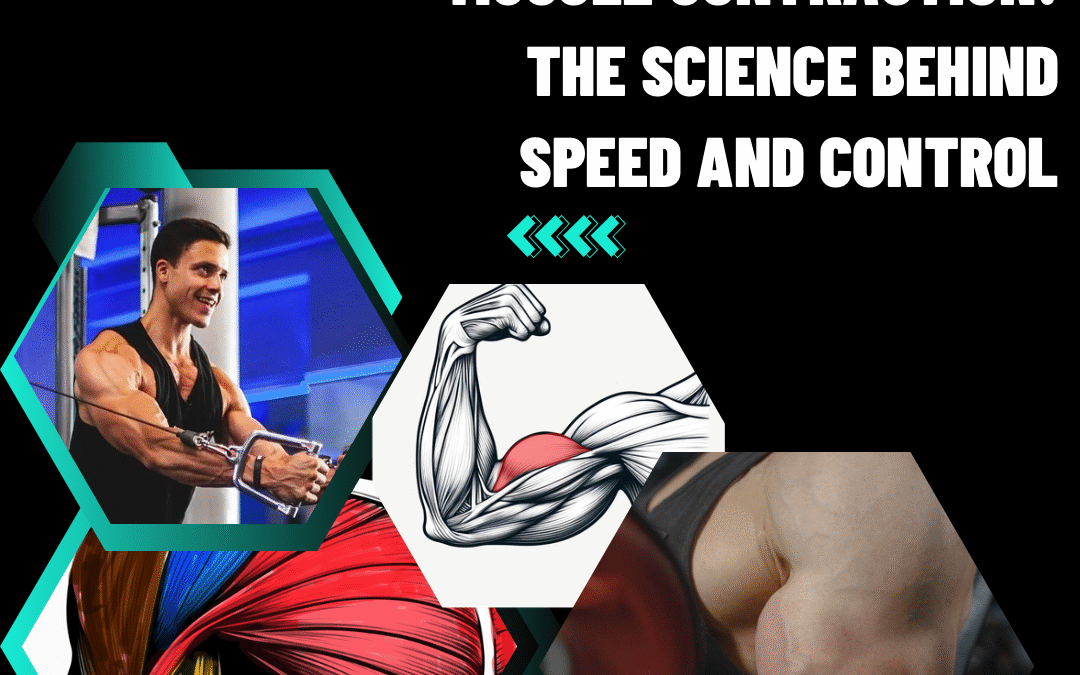
MUSCLE CONTRACTION : THE SCIENCE BEHIND SPEED AND CONTROL

Muscle contraction is a process happening inside the human body. Whenever you lift a weight, climb stairs or even blink, millions of tiny events occur within your muscles. These actions come together to create strength, speed, coordination. Muscle contraction is a process where muscle fiber shorten, generate tension and produce movement.
It’s all about muscle & how to exhaust it, then feeding it, and letting it rest so it can grow bigger and stronger. While keeping long term goals in sight, it is important to focus equally on periodical goals that will carry you forward. You perform hundreds of reps, maybe thousands of them each week. But have you ever thought about what actually happens each time you complete one rep? The more you know about the facts which influence a rep, the better you will understand how your muscles work.
Every repetition consists of three phases- the concentric contraction, the transition which is a static phase and the eccentric contraction. Concentric contraction is the one where you lift the weight. The transition or static is the one where you hold it for 3 to 5 seconds at the top and the eccentric contraction is the one where you lower the weight. For many exercises, the concentric phase comes first. But for some exercises such as squats or bench presses, we actually go down to start the movement. People do think that a muscle contracts during the first half of the movement and then relaxes as you return the weight to the starting position. But this is a misunderstanding. In fact a muscle contracts during both the phases. The only difference is that the muscle shortens during the concentric contraction and lengthens during the eccentric contraction.
Let’s say, you are doing a set of ten reps to failure on the chest press machine. You are doing positive very slowly, controlled, then putting maximum stress you are holding it statically at the top for 3 to 5 seconds and then lowering it slowly and steadily for several seconds. So, as you see, each repetition consists of three units- the positive, the static and the negative for ten reps. But actually you are doing 30 reps in each set.
Phase one- The concentric contraction. Bringing two joints together.

During the concentric contraction, the main working muscle shortens, pulling the bones and bringing two joints to come together. At the beginning of the movement, only a few motor units get activated, generating minimum force. Additional motor units are called upon, when more force is required. If the weight lifted is very light then many motor units remain inactive. Less muscle contracts. If the weight is heavy, muscle fatigued or maximum motor units recruit. The total amount of force that a muscle is able to generate, increases with the number of motor units that are utilized. Speed of the movement should be very controlled- no swinging, so that you will get maximum recruitment. If you let momentum do the job for you, you won’t use as many muscle fibers to lift the weight.
While lifting the weight, you should lift maximum weight. So that maximum muscle fibers will recruit. If maximum muscle fiber recruits, maximum muscle fibers will be damaged. If maximum muscle fibers are damaged, maximum growth will take place. Maximum hypertrophy will be there. More muscle means higher metabolism. Higher metabolism means more fat burn.
Phase Two- Static Or Peak contraction Muscle reaches in its shortest position at the end of concentric contraction. This phase is a static phase, where you should take a pause for 3 to 5 seconds, so that the working muscle contracts as much as it can. This technique is also called Peak contraction. If the weight is light, you can never reach maximum contraction.
Phase Three- Eccentric Contraction
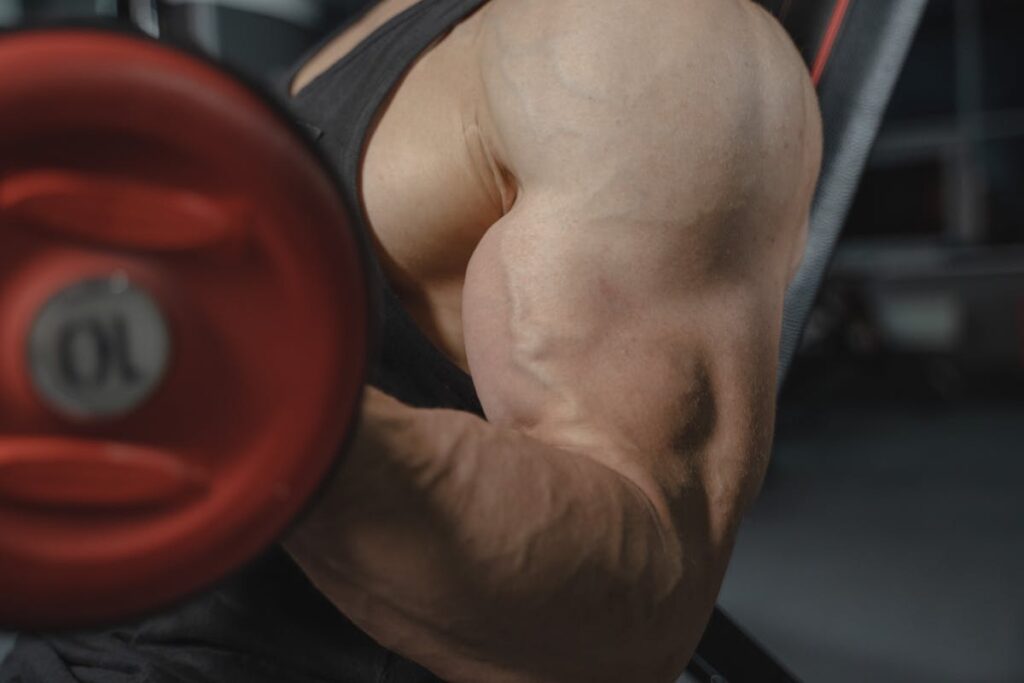
At the end of the concentric contraction, whether you hold it or not at peak contraction, you have to return the weight to the starting position. This half of the rep is called eccentric contraction. When you lower the weight in this phase, for example a bicep curl, a bicep lengthens but it’s still contracted to some degree. If not, weight would fall back to the starting position instead of returning in a controlled manner. Eccentric Contraction is as important as concentric contraction for promoting muscle growth. Breathing is also important during eccentric as well as concentric phases. Inhale during eccentric phase and exhale during concentric contraction.
FINAL WORDS:
ECCENTRIC AND CONCENTRIC CONTRACTION COMBINED RESULT IN A FULL RANGE OF MOTION OF A REP. FOR MAXIMUM CONTRACTION AND JOINT FLEXIBILITY YOU MUST UTILIZE FULL RANGE OF MOTION OF EVERY REP. SHORT RANGE OF MOTION FOR ANY MOVEMENT CAN LIMIT THE MUSCLE FIBER INVOLVEMENT AND LEAD TO DECREASED FLEXIBILITY. EXERCISING IN FULL RANGE OF MOTION IS SAFE AS LONG AS THE REP IS SLOW AND CONTROLLED.
- STAY AWAY FROM STEROIDS.
- SAY NO TO DRUGS.