
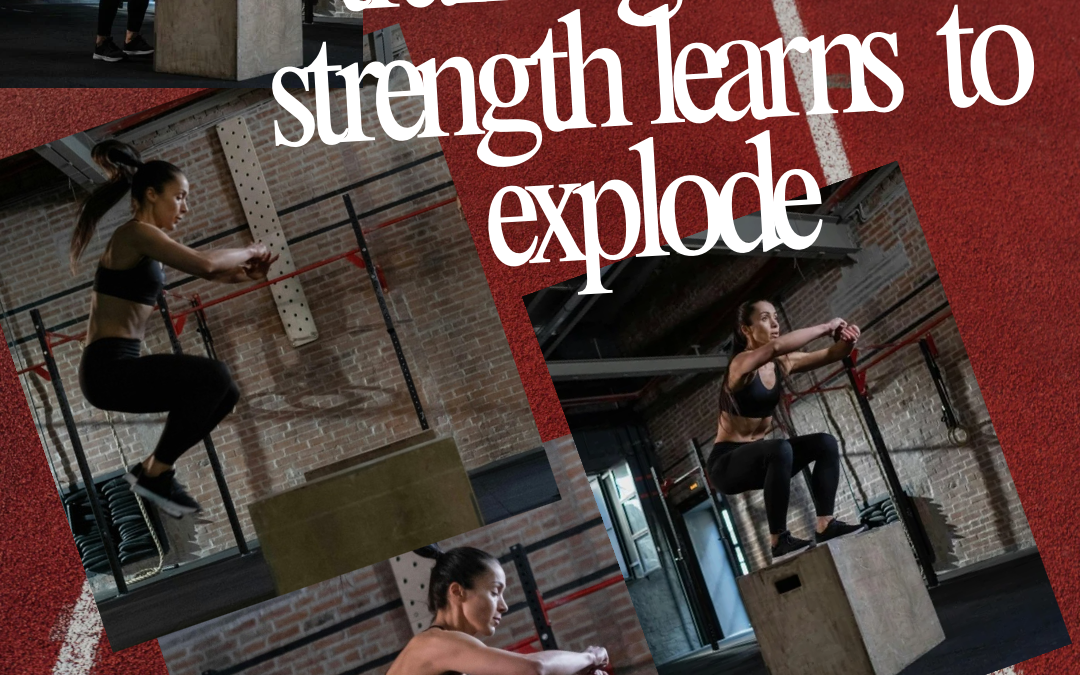
PLYOMETRIC TRAINING WHERE STRENGTH LEARNS TO EXPLODE

Plyometric is the art of teaching muscles to react fast. It’s a combination of speed & strength is power. Unlike strength training, where we focus on slow and controlled movements, Plyometric focus on speed and strength. Speed & strength are essential part of fitness found in all athletic movements. Plyometric training trains your body to produce force the moment whenever it is needed. This is why it’s a game changer for athletes who rely on quick jumps, fast sprints and sudden changes in direction. In the last few decades jumping, bounding, hopping exercises have been found & used by coaches in various ways to increase athletic performance. This method of training for power & explosiveness has been termed Plyometric.
Plyometric is a latin word which means measurable increases. Plyo means more and metric is a unit of measurement. The plyometric is called jump training but it’s not that all plyos are jumps or all jumps are plyometric. Plyometric is a good form of exercise but it’s not for everybody. For some people who are overweight or obese, it can be harmful also. So you have to be careful.

Plyometric is quick, explosive, powerful movements involving an eccentric contraction, followed immediately by an explosive concentric contraction. This action is achieved through the stretch shortening cycle or an eccentric-concentric joint action.
Plyometrics were originally developed as a shock method of training. Yuri Verkhoshansky, the Russian National Track and Field coach started this training. He believed that, for athletes to develop a high level of muscle performance, they needed unique and different training methods from their usual training methods.
At the core of Plyometric training is the body’s natural elastic ability. Muscle and tendons store energy when they are stretched and release it instantly during explosive movements. Plyometric exercises stimulate the body’s proprioceptive and elastic properties to generate maximum force output in a minimum amount of time. Plyometric training is an effective mode of training as it enhances motor learnings and neuromuscular efficiency promoting the excitability, sensitivity and reactivity of the neuromuscular system to increase the rate of force production which is power, motor unit recruitment, firing frequency and synchronizations.
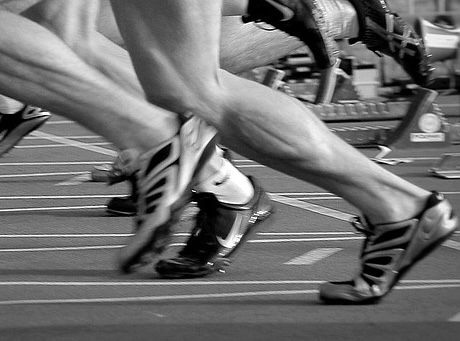
Plyometric training provides the opportunity to train specific movement patterns in a biomechanically correct manner at a more functionally suitable speed.
There are three phases involved in plyometric training, which are the eccentric or loading phase, the transition phase and the concentric or unloading phase.
1) The eccentric or loading phase- The first stage of plyometric movement is an eccentric phase which can be called a loading phase. This phase increases muscle spindle activity by pre-stretching the muscle prior to activation. Energy is stored in the elastic components of the muscle during the loading phase.
2) The transition phase- This phase involves dynamic stabilization. This is the time between eccentric contraction- the loading phase and concentric contraction- the unloading phase. In this phase muscle must switch from overcoming force to transmitting force in the intended direction. A rapid switch from an eccentric contraction to a concentric contraction leads to a most powerful response.
3) The concentric phase- The concentric phase or unloading phase occurs immediately after the transition phase and involves eccentric contraction resulting in enhanced muscular performance following the eccentric phase of muscle contraction.
The most important thing for any conditioning program is specificity. That means, any movement you perform in training should match as closely as possible the movements encountered during the event. If you are a rugby player or volleyball player then drop jumping or box jump are the right exercises. If you are a javelin thrower than upper body plyometrics are far better options. One of the biggest advantage of Plyometric training is its ability to convert strength into functional power. Athletes not only become stronger but also faster and more responsive. If performed correctly, Plyometric can also improve coordination and help reduce injury risk by strengthening muscles and tendons.

Plyometric uses impact based movements to create exaggerated concentric & eccentric contractions. Plyometric puts higher than normal forces in the musculoskeletal system. So it is important for athletes to have a good base of strength & endurance. As per many experts, an athlete should have thorough grounding in weight training. But still less intensive plyometric exercises can be incorporated into circuit or weight training during early stages for progressively conditioning to the athlete. Simple plyo drills such as skipping, hopping or bounding should be given first.
- FINAL THOUGHTS
Plyometric training plays a vital role in modern sports conditioning. It focuses on explaining movements that help athletes generate maximum force in minimum time. In sports like football, basketball, athletics, volleyball or cricket, Plyometric enhances speed, agility and athletic performance. Exercises such as jump squats, box jumps, bouncing and medicine ball throws train the muscles and nervous system to work more effectively together. Many athletes used plyometric exercises as a method of training to enhance power successfully. It requires careful attention during the drill or exercise. The challenge for athletes is to select or create an exercise that is specific to the event and involves the correct muscular action. This training method should be introduced very carefully. Proper warm-up, correct technique and adequate recovery are essential to avoid injuries. Plyometric training can be a powerful tool to elevate athletes performance when used properly. It gives athletes a competitive advantage. So in my opinion you should hire a personal trainer to get the best out of you.
- STAY AWAY FROM STEROIDS.
- SAY NO TO DRUGS.

ExoWatts
Great content! Keep up the good work!
roughsatwork@gmail.com
Thank you very much.